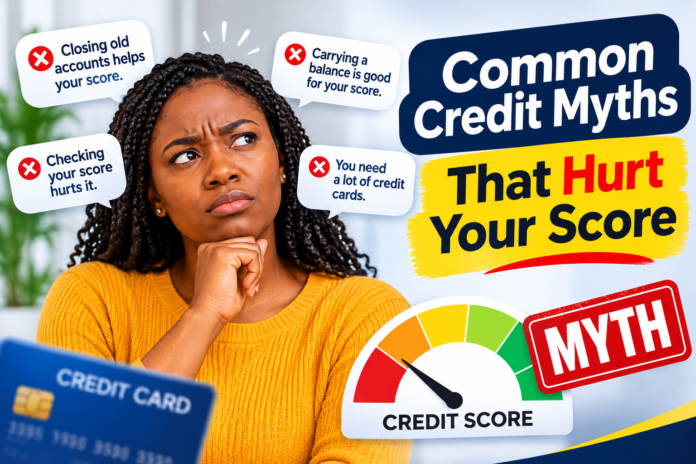


Credit myths are false beliefs about how credit works that lead millions of people to make poor financial decisions. This article identifies the most damaging misconceptions and explains what actually happens when you manage your credit account. You’ll discover why some common practices hurt your score and what real credit building looks like.
Checking Your Credit Score Ruins It
The Truth About Credit Inquiries
One of the most persistent credit myths is that checking your own credit score damages it. This misconception stops people from monitoring their financial health and catching errors early. When you check your own credit report or score, it generates what’s called a soft inquiry, which has zero impact on your credit score.
There are two types of inquiries: soft and hard. A soft inquiry happens when you review your own credit, when employers check your background, or when credit card companies do pre-screening. Hard inquiries occur when you formally apply for credit—a mortgage, auto loan, or credit card. Hard inquiries can lower your score by a few points, but only for the credit you actually pursue. This small temporary dip is normal and recovers within months.
Why Monitoring Matters
Checking your credit score regularly is actually one of the smartest things you can do. You can spot identity theft, dispute errors on your report, and track your progress toward a higher score. Free credit monitoring services and your bank’s built-in tools let you check without any penalty. Many people who believe this myth end up blindsided by low scores or fraudulent accounts they never knew existed.
- Soft inquiries never impact your score
- Hard inquiries drop your score 5-10 points temporarily
- Monitoring early catches fraud and errors
- You’re entitled to one free report annually from each bureau
Closing Old Credit Cards Improves Your Score
How Credit Utilization Works Against You
Many people close old credit cards thinking it makes them look financially responsible. This credit myth actually backfires because closing accounts reduces your total available credit and raises your credit utilization ratio. Credit utilization is the percentage of available credit you’re using. If you have $10,000 in available credit and carry a $3,000 balance, your utilization is 30%. Close a card with a $5,000 limit and suddenly your utilization jumps to 50%, which damages your score.
Keeping old accounts open maintains your available credit even if you never use them. This is especially true for cards with no annual fee. The scoring models reward you for having credit available but not maxing it out. Closing cards also shortens your credit history if that account no longer appears on your active accounts, though the closed account stays on your report for years.
The Strategy That Actually Works
Rather than closing cards, the smart approach is to keep them open and stop using them. Put one small recurring charge on old cards if you’re worried about inactivity closures, then pay it off monthly. This keeps the account active without raising utilization. If a card has an annual fee, closing it makes sense only if the damage to your credit history is worth the fee savings—usually it isn’t for people working to build credit.
| Action | Impact on Score | Best For |
|---|---|---|
| Keep card open, don’t use | Positive – maintains history and available credit | Most people building credit |
| Keep card open, pay small charges | Positive – shows active account use | Preventing closure due to inactivity |
| Close card with annual fee | Negative – reduces available credit | Only when fee outweighs score impact |
| Close card with no annual fee | Negative – always a poor choice | Almost never recommended |
You Need a Credit Card to Build Credit
Alternative Paths to Credit Building
The myth that credit cards are the only way to establish credit keeps many people locked out of the credit-building process. Some people avoid cards entirely due to past debt problems, yet they still need credit history. The truth is that multiple financial behaviors contribute to your score, and secured cards or credit builder loans are safer alternatives for people starting fresh.
A secured credit card requires a cash deposit that becomes your credit limit. You typically deposit $500 and receive a $500 credit line. You use it like a regular card, make on-time payments, and after 6-18 months of responsible use, the bank may convert it to an unsecured card and return your deposit. This builds credit history with lower risk of accumulating dangerous debt. Credit builder loans work similarly—you borrow a small amount held in a savings account, make monthly payments, and after the loan term ends, the money is yours plus you have credit history.
Considering Your Financial Situation
If you’re building emergency savings or working on financial stability, a credit builder loan might fit better than a credit card. A loan is a fixed monthly obligation you can plan for, whereas cards tempt you to spend more. Your utility and rent payments also affect credit in some scoring models now, meaning responsible payment of basic bills contributes to your score. Rent reporting services and utility inclusion in credit scoring expanded significantly in recent years.
- Secured cards require a deposit but build credit safely
- Credit builder loans provide fixed monthly payments
- Utility and rent payments increasingly count toward credit
- Store cards sometimes offer easier approval for beginners
- Payment history is the single most important credit factor
Paying Off Debt Instantly Boosts Your Score
Why Immediate Payoff Doesn’t Bring Instant Results
People often expect their credit score to jump the moment they pay off a loan or credit card balance. This credit myth creates disappointment because credit scoring is based on your entire history, not just recent actions. Paying off debt is absolutely the right move for your finances, but credit bureaus need time to process the information and update your report. Even then, your score may not rise immediately because paid-off accounts have less impact than active, well-managed accounts.
Your credit file takes weeks or months to update after you make payments. When you pay off a credit card, the new balance doesn’t appear instantly on your report. Once it does appear, credit utilization improvements take effect, but other factors remain unchanged. If you had late payments in your history, those don’t disappear. If you’ve had multiple recent hard inquiries or new accounts, paying off one debt won’t overcome that recent activity. Score changes happen gradually as your overall credit profile shifts.
The Real Timeline for Credit Improvement
Expecting immediate score changes sets you up for frustration. Instead, think in terms of months and years. As you demonstrate consistent on-time payments and reduce utilization, your score climbs steadily. If you’re starting from a damaged credit history, bringing your score to “fair” range might take 6-12 months of clean behavior. Moving from fair to good takes another 12-24 months. Building excellent credit is a multi-year process for most people.
The positive news is that paying off debt improves your financial situation immediately, even if the credit score lag bothers you. You’re reducing interest charges, freeing up monthly cash flow, and reducing financial stress. When you’re ready to make a major purchase like a home or car, your improved credit history will work in your favor. If you’re learning what to know before taking a personal loan, understand that lenders care about your full history, not just today’s score.
Having No Debt Means Perfect Credit
Why Inactivity Isn’t the Same as Good Credit
Some people believe the path to perfect credit is to avoid all debt and never use credit at all. This credit myth misses the point of credit scores entirely. Credit scores measure your ability to manage borrowed money responsibly. If you’ve never borrowed, you have no credit history, and lenders have nothing to evaluate. A blank credit file actually limits your options when you need credit for a car, home, or emergency.
Creditors want to see proof that you can borrow and repay on time. Perfect credit requires an active credit file with a variety of accounts managed well. This might include a credit card you use occasionally and pay in full, an auto loan you’re paying on schedule, and a clean payment history on utilities and rent. Someone with zero credit accounts and zero credit score is a bigger risk to lenders than someone with a good score built through responsible borrowing.
Building Credit Without Fear of Debt
If you have a history of overspending or debt problems, rebuilding involves using credit in a controlled way. This means secured cards with low limits, credit builder loans with set payments, or authorized user status on someone else’s established card. If you’re building savings with low income, you might choose credit strategically—perhaps a small secured card to establish history while you save money on the side.
- Active credit use and on-time payments build better scores than no credit
- Multiple account types (cards, loans, utilities) diversify your credit profile
- Lenders prefer borrowers with proven repayment history
- No credit history often results in higher interest rates or denial
- Starting small with secured products reduces debt risk
Hard Inquiries Permanently Damage Your Score
Understanding Inquiry Impact and Recovery
When you apply for credit, the lender performs a hard inquiry to assess your creditworthiness. Many people believe this one inquiry causes permanent score damage, leading them to avoid applying for any credit at all. The reality is that hard inquiries do impact your score, but the effect is temporary and minimal compared to other factors. A single hard inquiry typically lowers your score by 5-10 points and stays on your report for one year, though the impact diminishes over time.
Multiple hard inquiries within a short window have a combined effect that’s usually less damaging than you’d expect. When you’re rate shopping for a mortgage or auto loan, lenders expect it and the scoring models account for it. Inquiries made within 14-45 days typically count as one inquiry for scoring purposes, meaning you can shop rates without multiplying the damage. The damage is real but temporary—within months, as you maintain on-time payments and manage your accounts well, the impact fades.
When to Accept the Inquiry Trade-Off
Hard inquiries are a cost of accessing credit, and sometimes that cost is worth paying. If you’re applying for a car loan or mortgage, the inquiry impact is minor compared to the benefit of securing that loan. Worrying so much about inquiries that you avoid applying for needed credit actually keeps you stuck. The key is avoiding unnecessary applications—don’t apply for ten credit cards in a month just to see who approves you. Be strategic: apply for credit you actually need or want, accept the small inquiry impact, and move forward.
Frequently Asked Questions
Does My Income Affect My Credit Score?
Income does not factor directly into credit score calculations. Credit bureaus don’t have access to your income information or tax returns. However, lenders consider income when you apply for credit—a loan officer will review your application and income before approving a loan. Your credit score focuses on your payment history, amounts owed, length of history, credit mix, and recent inquiries. Two people with identical spending and payment habits will have identical credit scores regardless of whether one earns $40,000 and the other $200,000 annually.
Can Paying More Than the Minimum Help My Credit Faster?
Paying more than the minimum payment is always better for your finances because it reduces interest charges and speeds debt payoff. However, credit scoring models don’t reward paying extra; they only reward making your payment on time. Whether you pay the minimum or double the minimum, the score impact is the same that month. The benefit of paying extra shows up in your lower utilization ratio and faster debt elimination, both of which help your score over time. The real winner from extra payments is your wallet, not your score.
Does My Employment Status Show Up on My Credit Report?
Your employment information does not appear on your credit report. Credit reports contain payment history, account balances, inquiries, and public records like bankruptcies or liens, but not employment details. When you apply for credit, the lender might ask about your job, but that information stays with their application, not your credit file. Job changes, job loss, or employment gaps don’t directly impact your credit score. What matters is whether you can continue making payments on time—job loss is concerning because it may affect your ability to pay, not because employment itself is a scoring factor.
Will Getting Married Combine Our Credit Scores?
Marriage does not combine or merge credit scores or credit reports. You and your spouse maintain separate credit files and scores. However, if you open joint accounts or take out loans together, both of your credit reports will show those accounts. Each person remains responsible for their individual credit history. If one spouse has excellent credit and the other has poor credit, they won’t automatically adopt each other’s scores. Joint accounts are reported on both reports, so managing them responsibly benefits both people, but individual accounts remain individual.
How Long Do Negative Items Stay on My Credit Report?
Most negative items stay on your credit report for seven years from the date of first delinquency. Late payments, charge-offs, and collections appear for seven years. Bankruptcies remain for seven to ten years depending on the chapter filed. Hard inquiries stay for one year. These timelines are set by federal law, and items automatically fall off your report when they reach the age limit. You can dispute inaccurate items anytime, but accurate negative information can’t be removed early just by requesting it. However, the impact of old negative items decreases over time as your recent positive history grows.
Conclusion
Credit myths persist because credit itself is complicated and lenders don’t always explain how scoring works. By understanding the truth behind these misconceptions, you can make decisions that actually build credit strength instead of sabotaging it. Checking your own score is safe and necessary. Keeping old accounts open protects your credit mix. Paying off debt is right for your finances even if the score boost takes time. Building an active, diverse credit profile through responsible borrowing beats having no credit at all.
Start by checking your credit report for free at annualcreditreport.com and reviewing your score through your bank or a legitimate monitoring service. Look for errors and dispute them immediately. Then focus on the factors you can control: paying every bill on time, keeping balances low, and avoiding unnecessary new credit applications. If you’re rebuilding after past mistakes, consider a secured card or credit builder loan as a structured way to prove yourself. Your credit score will improve as your behavior improves, not overnight, but steadily and sustainably. Take action today by reviewing your report and identifying which myths have influenced your past decisions—then commit to better choices moving forward.