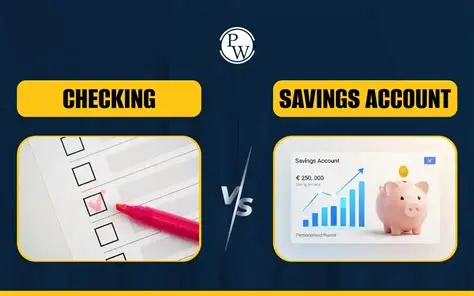
When it comes to managing your money, one of the very first decisions you’ll face is choosing between a checking account and a savings account — or figuring out how to use both wisely.
At a glance, the difference seems obvious. One is for spending, the other is for saving. But when you dig deeper, the choice isn’t always that simple. Fees, interest rates, accessibility, and your financial goals all play a role.
So let’s break it down in plain English 👇
What Is a Checking Account?
A checking account is designed for daily financial activity. It’s where your money lives when you plan to spend it.
Common Features of a Checking Account
- Debit card access
- Unlimited or high-limit transactions
- Online bill pay
- Mobile check deposits
- Direct deposit for paychecks
Most people use checking accounts to pay rent, buy groceries, cover subscriptions, and handle everyday expenses.
👉 Learn more about checking accounts from Investopedia:
https://www.investopedia.com/terms/c/checkingaccount.asp
Pros
- Easy access to funds
- Ideal for daily spending
- Often required for direct deposit
Cons
- Low or no interest
- Monthly maintenance fees (if minimums aren’t met)
- Not ideal for long-term savings
What Is a Savings Account?
A savings account is built for storing money you don’t plan to touch often — while earning interest.
Common Features of a Savings Account
- Earns interest on your balance
- Limited withdrawals per month
- FDIC insurance (up to $250,000)
- Encourages saving discipline
Savings accounts are perfect for emergency funds, vacation money, or short-term goals.
👉 FDIC explanation of savings accounts:
https://www.fdic.gov/resources/consumers/consumer-news/2020-06.html
Pros
- Earns interest
- Safer place for long-term funds
- Helps prevent impulse spending
Cons
- Limited withdrawals
- Lower returns compared to investing
- Slower access to cash
Checking vs Savings Account: Key Differences
| Feature | Checking Account | Savings Account |
|---|---|---|
| Primary Use | Spending | Saving |
| Interest | Usually none | Yes |
| Transaction Limits | High or unlimited | Limited |
| Debit Card | Yes | Sometimes |
| Best For | Daily expenses | Emergency & goal funds |
Which One Should You Use?
Here’s the honest answer: most people should use both — but how you use them matters.
Use a Checking Account If:
- You pay bills regularly
- You need fast access to money
- You receive salary or business income
Use a Savings Account If:
- You’re building an emergency fund
- You’re saving for a goal
- You want your money to grow (even slowly)
Financial experts often recommend keeping 3–6 months of expenses in a savings account.
👉 NerdWallet’s guide on savings goals:
https://www.nerdwallet.com/article/banking/how-much-should-i-have-in-savings
Can One Replace the Other?
Short answer: No — and it shouldn’t.
Using a checking account as a savings account leads to overspending.
Using a savings account as a checking account can trigger fees and withdrawal limits.
They are designed for different financial behaviors — and combining them creates balance.
Smart Strategy: How to Use Both Accounts Together
Here’s a simple system that works:
- Direct deposit your income into checking
- Automatically transfer a portion to savings
- Pay expenses from checking only
- Touch savings only for real needs or goals
Automation removes temptation — and builds wealth quietly over time.
What About High-Yield Savings Accounts?
High-yield savings accounts (HYSAs) offer higher interest rates than traditional savings accounts — often through online banks.
They’re great if:
- You want better returns
- You’re comfortable with online banking
- You don’t need physical branches
👉 Compare high-yield savings accounts:
https://www.bankrate.com/banking/savings/best-high-yield-interests-savings-accounts/
Final Verdict: Which Account Should You Really Use?
✔ Checking account for spending
✔ Savings account for protection and growth
✔ Both together for financial stability
Your money works best when it has a job — and these two accounts do very different jobs.
If you’re serious about building healthy finances, don’t choose one over the other. Use both strategically.