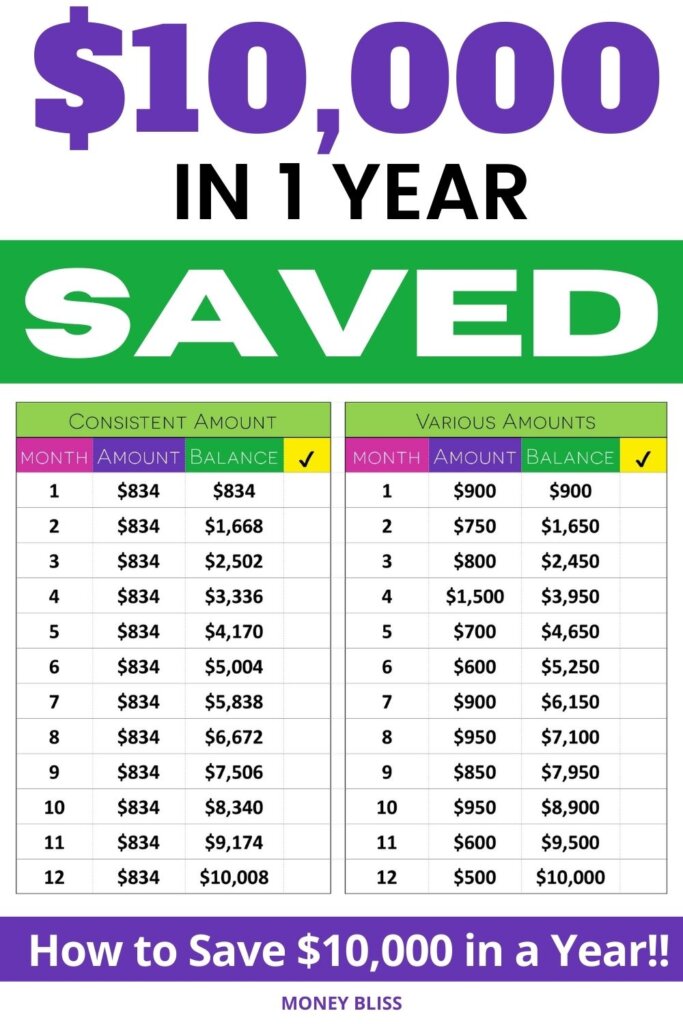
Saving $10,000 in one year may sound intimidating — especially if you’re living paycheck to paycheck. But it is possible with the right strategy, clear goals, and a bit of discipline. Whether you’re saving for an emergency fund, a down payment, or a dream vacation, this step‑by‑step realistic plan will help you get there.
Why $10,000?
Saving $10,000 gives you financial flexibility. It’s enough to cover:
- 3–6 months of emergency expenses for many people
- A down payment on a car
- A debt payoff boost
- A big travel adventure without financing it
If you want to understand why having a solid savings buffer matters, check out this helpful guide from The Balance on building an emergency fund: https://www.thebalance.com/emergency‑fund‑how‑much‑you‑need‑4173855
Step 1: Set Your Savings Target
Break it down.
💡 $10,000 ÷ 12 months = ~$833 per month
That’s about $192 per week — doable if you plan correctly.
Instead of “I want to save more,” use a specific number:
“I will save $833 each month toward my $10,000 goal.”
According to behavioral science, specific financial goals help you stay accountable. You can read more about goal‑setting psychology at MindTools: https://www.mindtools.com/page6.html
Step 2: Track Your Income & Spending
Before cutting anything, know your numbers.
Use a budgeting app like:
- Mint – https://www.mint.com/
- YNAB (You Need A Budget) – https://www.youneedabudget.com/
- Personal Capital – https://www.personalcapital.com/
These tools connect to your accounts and help you see exactly where your money goes each month.
Ask yourself:
- Where am I overspending?
- What subscriptions can I cancel?
- Do I really need two streaming services?
Step 3: Cut Costs Strategically (Without Feeling Deprived)
Small changes add up.
Housing & Utilities
- Refinance your mortgage or negotiate rent
- Switch to energy‑efficient habits (programmable thermostat)
- Save on utilities with https://www.energy.gov/energysaver/ tips
Food & Groceries
- Plan meals, shop with a list
- Buy generic brands
- Skip eating out 1–2 times per week
According to the USDA, meal‑planning and smart grocery shopping can save hundreds per month: https://www.usda.gov/
Subscriptions & Memberships
Audit recurring charges monthly. Cancel what you don’t use.
Step 4: Boost Your Income
Cutting expenses is only part of the game. Increasing income gets you there faster.
Side Hustles Ideas
- Freelance writing or design
- Rideshare driving
- Tutoring or teaching online
- Selling items on eBay or Poshmark
Even a $200 monthly side income gets you $2,400 toward your goal — without cutting your lifestyle drastically.
Explore side hustle ideas here: https://www.entrepreneur.com/article/305063
Step 5: Automate Your Savings
Don’t rely on willpower.
Set up automatic transfers:
- $200 every Friday into a savings account
- Transfers on paydays
This helps you treat savings like a non‑negotiable bill instead of an afterthought.
Online banks like Ally or Capital One 360 have strong savings tools.
Step 6: Monitor, Adjust & Celebrate
Check in monthly:
- Are you on track?
- Did a bill jump?
- Can you save more this month?
At each milestone — 25%, 50%, 75% — take a moment to recognize your progress.
📌 Small rewards keep motivation high!
Example Savings Tracker
| Month | Target | Actual Saved |
|---|---|---|
| January | $833 | $900 |
| February | $833 | $875 |
| March | $833 | $840 |
| … | … | … |
| December | $833 | $910 |
| Total | $10,000 | $10,275 |
Bonus Tips
✅ Save windfalls (tax refunds, bonuses)
✅ Use cash‑back apps like Rakuten or Ibotta
✅ Round up purchases into savings
Conclusion
Saving $10,000 in a year is realistic if you:
- Set clear goals
- Track your spending
- Cut smart costs
- Increase your income
- Automate your savings
Remember: small choices lead to big results. Start now — your future self will thank you.